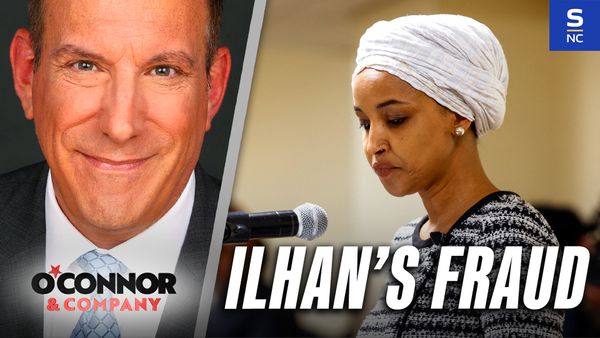

In this discussion, Scott Johnson delves into the intricate details surrounding the Ilhan Omar story, focusing on allegations of immigration fraud, name changes, and connections to Somali fraud. Johnson reveals how he first came across Omar’s story in 2016 when she was pursuing a state legislative office. He discusses the controversy surrounding Omar’s marriages, suggesting one was a sham, and touches on the larger issue of Somali fraud in the Twin Cities. Johnson also addresses the potential misrepresentation of Omar’s father’s identity and role in the Somali Civil War. Furthermore, he explores Omar’s involvement in the Feeding Our Future program, a significant fraud case, and how her actions may have facilitated the scam. The conversation underscores the importance of scrutinizing such claims and their implications on public trust and policy.
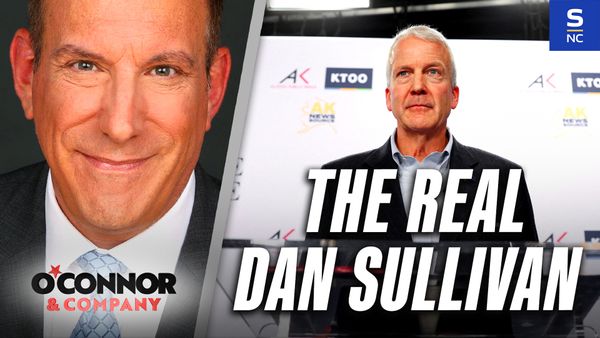
This segment dives into several pressing election-related topics, featuring insights from Hans Von Spakovsky, a senior legal fellow at Advancing American Freedom. Von Spakovsky addresses the controversial presence of a fake candidate, Dan Sullivan, on the Alaska ballot, designed to confuse voters and potentially sway election results. The conversation also covers the Justice Department's efforts to intervene in state elections, the implications of using student IDs for voter registration, and recent legal developments involving the Justice Department and voter integrity.
Von Spakovsky discusses the unusual move by the federal government to challenge the Alaska Supreme Court's decision regarding the fake candidate, highlighting the complexities introduced by ranked-choice voting in Alaska. He also addresses the significance of student IDs in voter registration, explaining potential vulnerabilities in the current system. Additionally, the segment touches on the politicization of the Justice Department, referencing Eric Holder's past actions, and examines the ramifications of a fake polling firm's actions on the 2026 election.
The discussion further delves into the Charlie Kirk murder trial, expressing concern over the significant delay in the trial proceedings, and touches on the arrest of two senior FBI officials for lying to Congress about their involvement in the Hunter Biden laptop investigation. Finally, the segment briefly mentions the issue of voter fraud, exemplified by a case where a Fulton County election official found her identity had been used fraudulently in another state.
This analysis provides a comprehensive look at the intersection of legal, electoral, and ethical issues surrounding the 2026 election cycle, offering expert commentary on each topic.
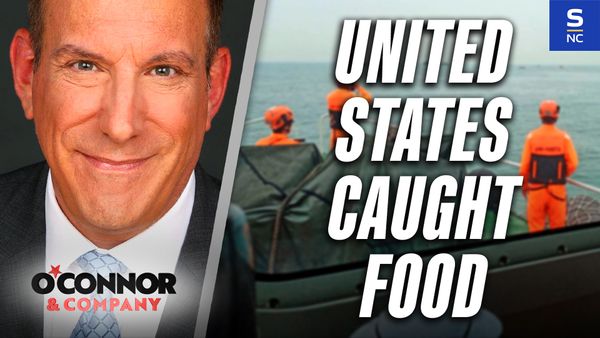
Jason Joyce, an eighth-generation commercial fisherman and Director of Advocacy for the New England Fishermen Stewardship Association, discusses the significance of the Trump administration's new initiative called U.S. Caught Food. The initiative highlights the importance of sourcing seafood domestically, addressing concerns over the quality, safety, and labor conditions of imported seafood. Joyce emphasizes that 80% of the seafood consumed by Americans is imported, often from less regulated countries, leading to potential health risks and unethical labor practices. The conversation also touches on the historical decline of domestic seafood processing and the efforts to reverse this trend. Joyce advocates for better labeling and marketing to promote American-caught seafood, ensuring consumers can make informed choices that support local fishermen and ensure higher safety standards.
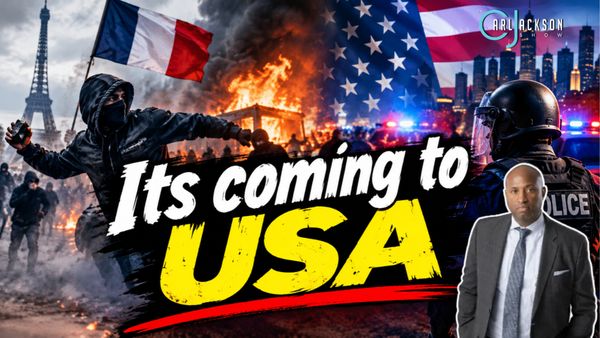
In this segment, Larry discusses the recent riots spreading across Europe with Nile Gardner, the Director of the Margaret Thatcher Center for Freedom at the Heritage Foundation. They delve into the root causes of the unrest, attributing it to a combination of communist and Islamist ideologies. Gardner emphasizes that the riots are not about social conditions in France but are part of a broader attempt to overthrow Western civilization. They also touch upon the role of mass migration and the backlash against multiculturalism in Europe. Additionally, the conversation highlights the differing responses from European leaders, such as Italy's Prime Minister, who has taken a stronger stance against the riots compared to French President Macron. The discussion concludes with an analysis of the potential political implications, including the possibility of far-right leaders like Marine Le Pen gaining power in France and Nigel Farage in the UK.
In a shocking conversation, a professor shares the alarming truth about the state of education in the United States. With a growing number of students graduating without a basic understanding of American history, civics, and government, the country's future is at stake. The professor reveals the disturbing trend of students being indoctrinated with Marxist ideologies and a lack of critical thinking skills, leaving them susceptible to any ideology that comes their way.
This episode delves into the problems plaguing the education system, from the No Child Left Behind Act to the Common Core curriculum, which has led to a decline in the teaching of American government and civics. The professor highlights the importance of understanding the difference between equality and equity, and how the latter is being used to force equal outcomes, rather than providing equal opportunities. He also discusses the impact of the Trump administration's efforts to cut off student loan funding for certain degree programs that don't provide a good return on investment.
The conversation also touches on the issue of censorship on college campuses, where speakers are being silenced and assaulted for their views. The professor emphasizes the importance of critical thinking and the need for students to be exposed to different perspectives, rather than being shielded from opposing viewpoints. He also shares his concerns about the growing anti-American sentiment among young people, who are being taught to hate America and its principles.
If you're concerned about the future of our country and the education system, this episode is a must-listen. Join the conversation with the professor as he shares his insights and expertise on the state of education in America. Listen to the full episode to learn more about the alarming trends and what can be done to reverse them.
Follow Carl Jackson:
Facebook: https://www.facebook.com/carljacksonradio
X/Twitter: https://twitter.com/carljacksonshow
Instagram: https://www.instagram.com/thecarljacksonshow
Website: http://www.TheCarlJacksonShow.com
Store: https://CarlJacksonStore.com
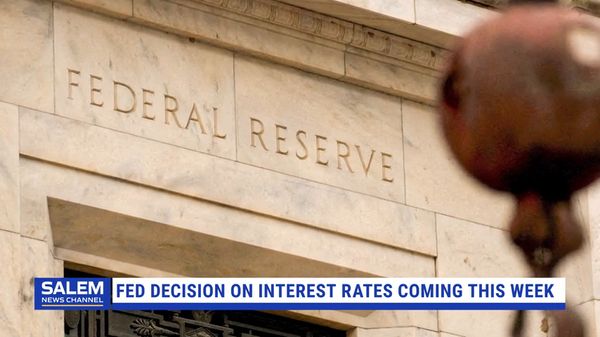
The Federal Reserve is preparing to announce its latest interest rate decision Wednesday, a move that could have implications for borrowing costs, consumer spending and the broader U.S. economy.
The announcement comes as policymakers continue to weigh inflation, employment trends and economic growth while determining the appropriate direction for monetary policy.
The Federal Open Market Committee, which sets the central bank's benchmark interest rate, is scheduled to conclude its two-day meeting Wednesday.
The Fed's decision will be closely watched by consumers, businesses and financial institutions looking for indications of where interest rates could be headed in the coming months.
The central bank uses interest rates as one of its primary tools to manage inflation and support economic stability.
Higher interest rates generally make borrowing more expensive, which can slow consumer spending and business investment. Lower rates can encourage borrowing and economic activity.
For Americans, the Fed's decision can eventually influence the cost of credit cards, auto loans, home equity loans and other forms of borrowing.
Mortgage rates are also affected by broader financial market conditions and do not necessarily move in direct proportion to changes in the Fed's benchmark rate.
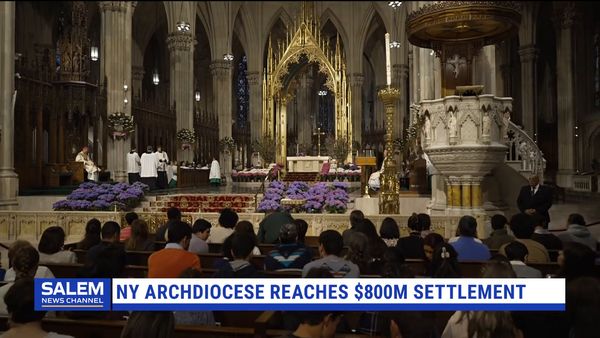
The Archdiocese of New York has reached an $800 million settlement with approximately 1,300 people who say they were sexually abused by Catholic clergy members and other church-affiliated individuals.
The agreement, announced Saturday, is the second-largest sexual abuse settlement involving a Catholic archdiocese in the United States.
Archbishop Ronald Hicks confirmed the agreement in a message to clergy, saying the settlement represents an important step toward addressing decades of allegations against the church.
The deal has not yet been formally signed. Church officials and attorneys representing the survivors are expected to finalize the agreement during the first week of November.
The settlement follows more than seven years of litigation involving allegations of sexual abuse by priests, lay leaders and other individuals associated with the archdiocese.
Under the agreement, survivors will have the option of accepting a payment of $250,000 or having their individual claims reviewed for potentially larger compensation based on the circumstances of the alleged abuse.
Attorneys representing the survivors say the agreement also includes measures intended to increase transparency, including the publication of a list of clergy members credibly accused of abuse and the release of certain church records.
The settlement comes after lengthy negotiations between the archdiocese and attorneys for the claimants. The possibility of bankruptcy proceedings had also been a concern during discussions.
In his message to clergy, Hicks expressed hope that the agreement would help survivors find a measure of healing and reconciliation.
Attorneys representing the claimants described the settlement as a significant step toward accountability after years of legal proceedings.
Many of the allegations date back decades, with some survivors now in their 60s, 70s and 80s.
The lawsuits were made possible in part by New York's Child Victims Act, enacted in 2019, which expanded opportunities for survivors of childhood sexual abuse to pursue civil claims that had previously been barred by statutes of limitations.
The Archdiocese of New York serves approximately 2.5 million Catholics across Manhattan, the Bronx, Staten Island and several counties north of New York City.
The $800 million agreement is surpassed only by the Archdiocese of Los Angeles' $880 million settlement reached in 2024.
The New York settlement is expected to resolve the outstanding claims covered by the agreement once the remaining legal paperwork is completed.
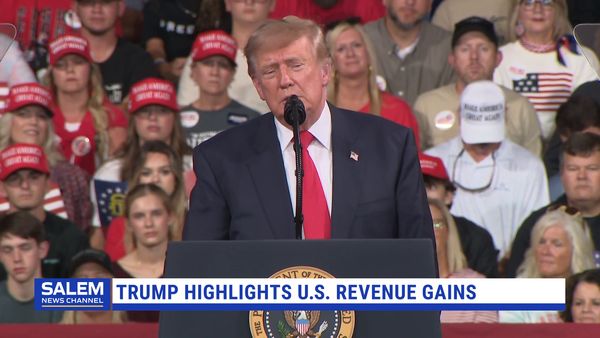
President Donald Trump highlighted what he described as record financial gains for the United States during a campaign rally in Perry, Georgia, on Saturday, while acknowledging concerns about rising gasoline prices.
Speaking to supporters ahead of the November 3 midterm elections, Trump said American oil and gas producers are benefiting from higher energy prices and increased demand amid the ongoing conflict in the Middle East.
The president claimed the United States is generating hundreds of billions of dollars through its energy industry, pointing to oil and gas production in states including Texas, Oklahoma and Louisiana.
Trump said his advisers had cautioned him against emphasizing those financial gains while Americans continue to face higher prices at the pump.
However, the president told supporters he decided to address the issue despite concerns about how his remarks might be portrayed.
"I could just see the fake headlines," Trump said, suggesting news organizations would criticize him for discussing financial gains while consumers struggle with fuel costs.
"But I said I don't give a damn. I'm going to say it. We're making a freaking fortune," Trump continued.
Trump also predicted that gasoline prices would decline, arguing that the country's energy industry is strengthening the American economy.
Higher oil prices can benefit domestic energy producers by increasing revenue, although they also raise costs for drivers, businesses and industries that depend on transportation.
The president's remarks come as gasoline prices remain a concern for American households. According to Reuters, the national average has climbed to approximately $4.27 per gallon, nearly 40 percent higher than a year earlier.
Trump has repeatedly emphasized domestic energy production and economic growth during his recent campaign appearances, presenting both as major accomplishments of his administration.
Saturday's rally was part of a broader effort to support Republican candidates ahead of the midterm elections, when voters will determine control of Congress.
With Election Day approaching, the economy and cost of living remain central issues for voters, particularly as higher energy prices continue to affect household budgets.
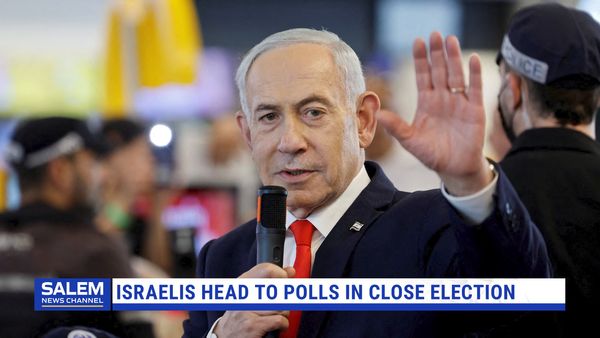
Israeli voters are set to head to the polls Tuesday in an election that will determine whether Prime Minister Benjamin Netanyahu secures another term in office.
Netanyahu's Likud party faces a challenge from the centrist Yashar party, led by Gadi Eisenkot, a former chief of staff of the Israel Defense Forces.
The election comes amid ongoing political divisions over Israel's security, leadership and the government's handling of the conflict in Gaza.
Unlike the United States, Israel does not directly elect its prime minister. Instead, voters select political parties to represent them in the Knesset, the country's 120-seat parliament.
A party or coalition must secure the support of at least 61 lawmakers to form a governing majority.
That means the outcome will depend not only on how many seats each party wins but also on which parties are willing to work together after the election.
Netanyahu, Israel's longest-serving prime minister, has led the country through multiple periods of conflict, including the aftermath of the October 7, 2023, Hamas attack.
His leadership and handling of the subsequent military campaign in Gaza have remained central issues in Israeli politics.
Eisenkot, who previously served in Netanyahu's war cabinet, resigned from the emergency government in 2024 after criticizing the prime minister's approach to the conflict.
Although Eisenkot supported Israel's military campaign against Hamas, he argued that Netanyahu had failed to establish a clear strategy for achieving the country's long-term objectives in Gaza.
Eisenkot's political challenge places two prominent figures with extensive national security experience on opposing sides of the election.
With coalition negotiations expected to play a decisive role, the election could shape Israel's next government and its approach to security and foreign policy.
Voters are scheduled to cast their ballots Tuesday, October 27.
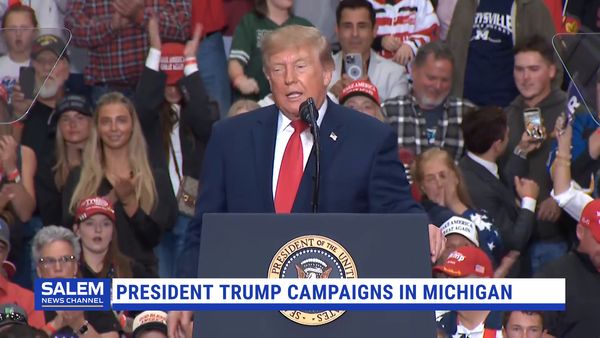
President Donald Trump campaigned in Michigan on Sunday in support of Republican Senate candidate Mike Rogers, using the appearance to launch a sharp attack against Democratic opponent Abdul El-Sayed.
Speaking to supporters just nine days before the November 3 midterm elections, Trump criticized El-Sayed's religion and accused him of having ties to extremist organizations.
"I'm here to keep a Jihadist Muslim Brotherhood member from becoming a United States Senator, and that's the fact," Trump told the crowd.
The president continued by urging Michigan voters to reject El-Sayed, referring to the Democratic candidate by an incorrect name during his remarks.
Trump also said El-Sayed should never be allowed inside the U.S. Capitol as a member of the Senate.
The president's comments focused on El-Sayed's Muslim identity and included allegations of extremist affiliations. No supporting evidence for those allegations was provided in the remarks.
El-Sayed, a physician and former public health official, is competing against Rogers, a former congressman, for Michigan's U.S. Senate seat.
The contest is part of a broader battle for control of Congress, with Republicans and Democrats campaigning across several closely watched states ahead of Election Day.
Trump's appearance underscored his involvement in Republican Senate campaigns as the midterm elections approach.
Michigan voters will decide the race on Tuesday, November 3.
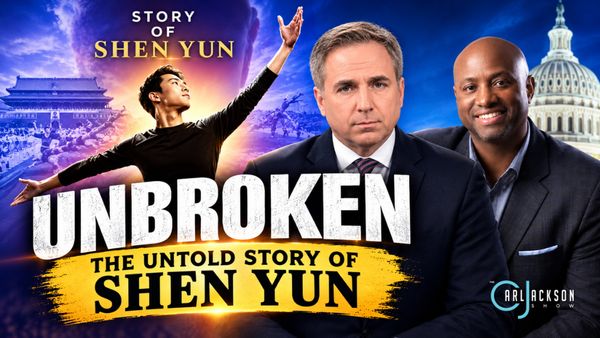
In a shocking exposé, a documentary film reveals the far-reaching influence of the Chinese Communist Party (CCP) in the United States, using a dance company as a case study. This episode delves into the world of Shen Yun Performing Arts, a classical Chinese dance company that aims to revive traditional Chinese culture and share the stories of people of faith in modern China. But what happens when the CCP tries to silence them?
The CCP's tactics are revealed through a series of articles in the New York Times, which were actually part of a coordinated disinformation campaign. The film, "Unbroken: The Untold Story of Shen Yun," exposes the CCP's use of proxy operations, including hiring paid protesters and using social media influencers to spread their narrative. The CCP's reach is staggering, with even the FBI getting caught up in their web.
The documentary also highlights the personal stories of Shen Yun performers who have faced persecution in China, including the tragic tale of a dancer whose father was imprisoned and died in a labor camp. The CCP's actions are a stark reminder of the dangers of their influence operations, which can have real-world consequences for individuals and organizations.
Join the conversation and listen to this eye-opening episode to learn more about the CCP's influence operations and the brave individuals who are fighting back. Don't miss this thought-provoking discussion with Steve Lance, the narrator of the documentary, as he shares his insights on the CCP's tactics and the importance of standing up to their influence.
Follow Carl Jackson:
Facebook: https://www.facebook.com/carljacksonradio
X/Twitter: https://twitter.com/carljacksonshow
Instagram: https://www.instagram.com/thecarljacksonshow
Website: http://www.TheCarlJacksonShow.com
Store: https://CarlJacksonStore.com
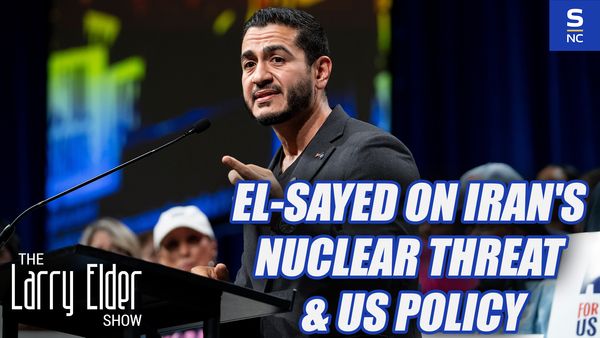
During a debate, El-Sayed and Mike Rogers discuss the war with Iran and its implications for U.S. national security. Dr. El-Sayed argues that the threat posed by Iran was contained during the Obama administration through diplomacy, specifically the JCPOA agreement, which Donald Trump later withdrew from. He criticizes the decision to make war, noting the economic costs to Americans, such as higher gas and grocery prices. Rogers, on the other hand, asserts that Iran remains a significant threat, capable of developing a nuclear weapon and funding terrorist groups like Hamas, Hezbollah, and the Houthis. He emphasizes the importance of preventing Iran from obtaining nuclear capabilities and criticizes those who oppose the war without considering its broader consequences.
Larry Elder discusses the challenges of preventing Iran and North Korea from becoming nuclear powers. He questions the effectiveness of aggressive diplomacy, referencing past agreements and actions by the U.S. and its allies. Elder highlights the unanswered questions surrounding the Trump administration's approach to Iran, including the lack of congressional authorization and the assertion that Iran's nuclear program has been completely obliterated. He also examines the failure of similar diplomatic efforts with North Korea, pointing out the discrepancies between promises and actions taken by these nations. Elder emphasizes the importance of a clear, compelling strategy to prevent these countries from achieving nuclear capability.
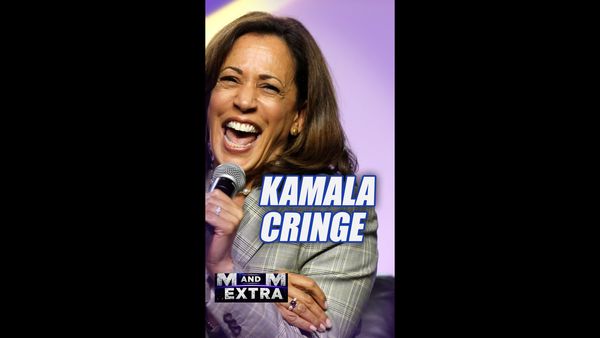
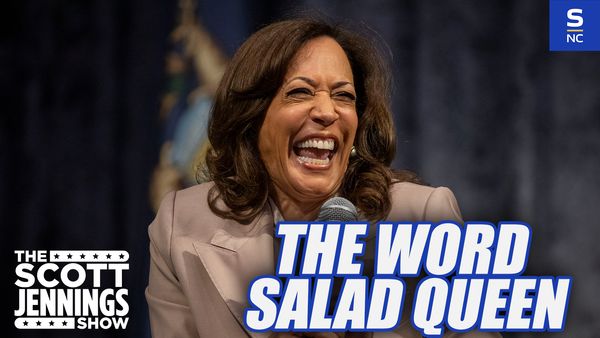
Stop what you're doing and watch this. Kamala Harris talking to a room full of union workers like they're in kindergarten—slowing her voice down to a crawl, It's painful and hilarious at the same time. If this is the best the Democrats have to offer, we've got nothing to worry about at the ballot box.
--
M and M Extra! If you love smart unscripted talk show chemistry, you’re in the right place. Two iconic talk radio hosts. One unfiltered daily conversation. No scripts. No spin. Just Mike Gallagher and Mark Davis breaking down the news the way it should be with zero apologies.
Like and subscribe to youtube.com/@MandMExtra for more content.
Watch full episodes here:
https://www.youtube.com/playlist?list=PL8EGNf1WbbwMRurHjD-q-sft3OQfbxop8
Check out highlight clips from all our shows:
https://www.youtube.com/playlist?list=PL8EGNf1WbbwPQn44WIEh9LfT3hP1lng9w
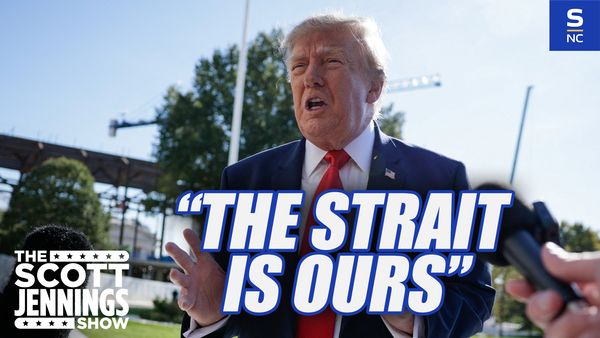
President Trump addressed the nation from ForT Myers, Florida, discussing the ongoing situation with Iran and the Strait of Hormuz. In his remarks, Trump emphasized the strategic importance of the strait and the economic benefits of securing oil flow through it. He highlighted the increased oil production from the region, underscoring the U.S.'s strong position. Trump's speech also touched on the necessity of decisive action against the Iranian regime, which he described as a significant threat to global security. He argued that the regime's ambitions and actions warrant proactive measures to ensure peace and stability in the region. The president's rhetoric suggests a firm stance on Iran, indicating that the U.S. will take all necessary steps to protect its interests and those of its allies.
Kamala Harris's communication skills and public perception are the central focus of this clip. Despite her attempts to connect with the audience through different accents and lighter moments, the overall message is often lost. This clip highlights the challenges faced by public figures in maintaining a relatable yet meaningful presence.
The Jake Underwood Show is the daily conversation hub for Northeast Ohio, >>The Jake Underwood Show is the daily conversation hub for Northeast Ohio, delivering fast, honest talk on politics, culture, faith, sports, and everyday life. <<
As you look out to your retirement horizon, do you see the clarity of sunny >>As you look out to your retirement horizon, do you see the clarity of sunny skies, or the uncertainty of storm clouds? Chart a safe course with Retirement on the Horizon. <<
After a three-year absence, Summit County Republican Party Chairman Bryan >>After a three-year absence, Summit County Republican Party Chairman Bryan Williams returns as host of The Chairman’s Hour. The Chairman’s Hour features the seasoned voice of Summit County Republican Party Chairman Bryan Williams. Each week Chairman . . . <<
From the Median brings into sharp contrast the two sides of the greatest human >>From the Median brings into sharp contrast the two sides of the greatest human rights issue of our time: those defending the Right to Life for all, and those who are headed in the exact opposite direction. <<
Salem Media, our partners, and affiliates use cookies and similar technologies to enhance your browsing experience, analyze site traffic, personalize site content, and deliver relevant video recommendations. By using this website and continuing to navigate, you consent to our use of such technologies and the sharing of video viewing activity with third-party partners in accordance with the Video Privacy Protection Act and other privacy laws.Privacy Policy


